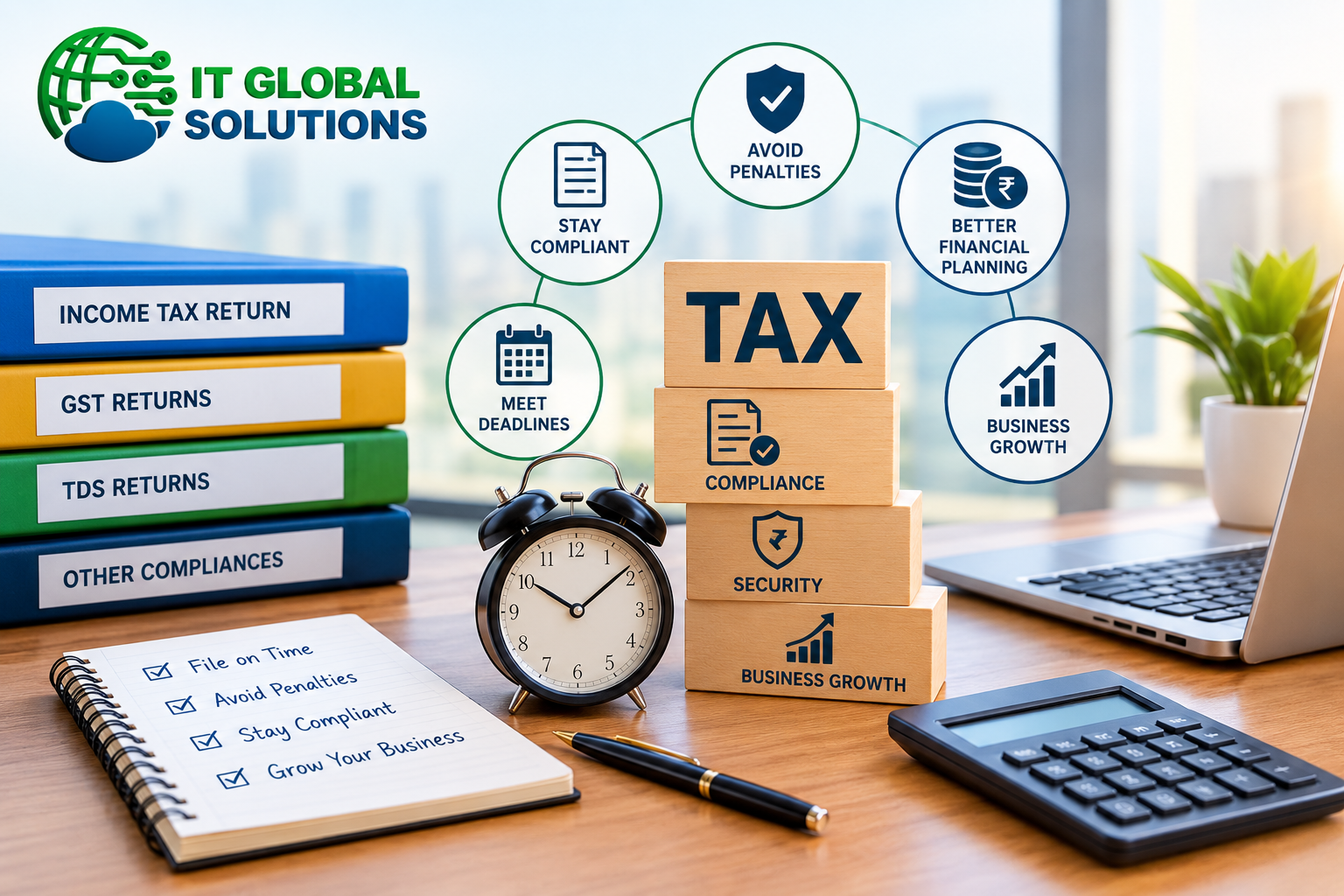
Running a business involves much more than managing customers, employees, sales, and daily operations. One important responsibility that businesses cannot afford to overlook is timely tax filing. Whether you run a small business, startup, partnership firm, or established company, filing your taxes on time helps you stay compliant and avoid unnecessary financial and legal complications.
In India, businesses have to manage different tax-related responsibilities depending on their structure and activities. Missing a tax filing deadline can result in interest, penalties, notices, and additional compliance work. On the other hand, timely filing makes it easier to maintain accurate financial records and manage business finances effectively.
What Is Timely Tax Filing?
Timely tax filing means submitting the required tax returns and related information to the appropriate government authority within the prescribed deadline.
For businesses, tax compliance may include Income Tax Return (ITR) filing, GST returns, TDS returns, and other applicable statutory filings. The exact requirements and deadlines depend on the type of business, turnover, transactions, and applicable tax regulations.
Staying aware of these deadlines is an important part of responsible financial management.
Why Is Timely Tax Filing Important for Businesses?
1. Helps Avoid Penalties and Interest
One of the most obvious benefits of filing taxes on time is avoiding unnecessary penalties and interest. Delayed filing may increase the financial burden on a business, depending on the applicable tax rules.
By maintaining a proper tax calendar and completing filings before the due dates, businesses can reduce the risk of additional costs.
2. Keeps Your Business Tax Compliant
Tax compliance is an essential part of running a business in India. Regular and timely filing helps demonstrate that your business is meeting its statutory responsibilities.
Good compliance practices can also make it easier to respond to tax-related queries or notices when required.
3. Makes Financial Planning Easier
When tax filings are completed regularly, businesses have a clearer picture of their income, expenses, tax liabilities, and overall financial position.
This information can help business owners plan expenses, manage cash flow, and make more informed financial decisions.
4. Reduces the Risk of Last-Minute Errors
Waiting until the last moment to prepare tax returns can lead to mistakes. Important invoices, financial records, deductions, or transaction details may be overlooked when everything is handled in a hurry.
Timely preparation gives businesses enough time to review their records, identify discrepancies, and correct errors before submitting returns.
5. Supports Better Record Keeping
Regular tax filing encourages businesses to maintain updated financial records. Documents such as invoices, receipts, bank statements, expense records, and tax-related information become easier to organize when bookkeeping is done consistently.
Well-maintained records can also make future accounting and tax preparation more efficient.
6. Helps Maintain a Strong Financial Track Record
Businesses may need financial documents and tax-related records when applying for loans, credit facilities, investments, or certain business opportunities.
Consistent tax compliance can help businesses maintain organized financial documentation that may be useful when financial information is requested by lenders, investors, or other stakeholders.
7. Helps Avoid Unnecessary Tax Notices
Incorrect or delayed filings can sometimes result in additional communication from tax authorities. Although receiving a notice does not necessarily mean that a business has done something wrong, accurate and timely filing can reduce avoidable compliance issues.
Keeping financial records updated also makes it easier to respond if clarification is required.
Common Tax Filing Responsibilities for Indian Businesses
Depending on the nature and structure of a business, common tax-related responsibilities may include:
- Income Tax Return (ITR) filing
- GST return filing
- TDS return filing
- Advance tax payments, where applicable
- Tax audit requirements, where applicable
- Maintaining supporting financial and tax records
Since tax requirements can vary between businesses, it is important to understand which filings apply to your particular business.