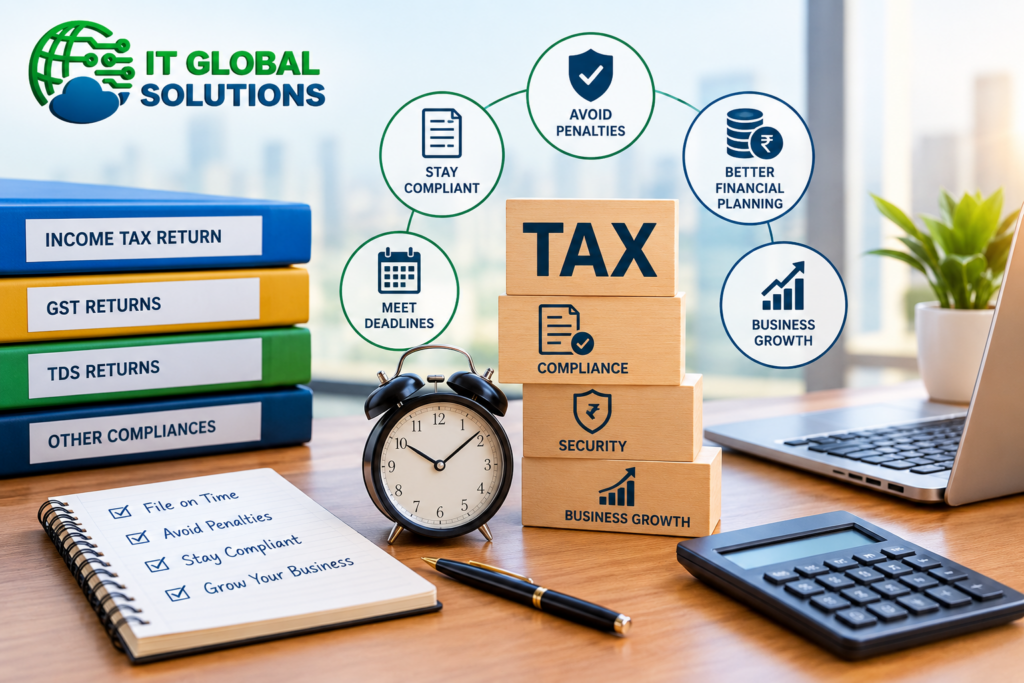
For small businesses in India, managing taxes is an important part of financial planning. Tax planning is not simply about reducing tax payments. It is about understanding your tax responsibilities, organizing finances properly, and making informed business decisions throughout the financial year.
With proper planning, small business owners can manage cash flow better, avoid last-minute compliance issues, and take advantage of deductions and benefits available under applicable tax laws.
In this blog, we’ll look at some practical tax planning strategies for small businesses in India.
What Is Tax Planning for a Small Business?
Tax planning means organizing your business finances and transactions in a way that helps you meet your tax obligations efficiently and within the law.
It may involve reviewing income and expenses, maintaining proper records, understanding eligible deductions, planning investments, and keeping track of tax deadlines.
Good tax planning should always focus on legal compliance and accurate reporting, rather than attempting to hide income or avoid taxes improperly.
Why Is Tax Planning Important for Small Businesses?
Small businesses often operate with limited cash flow and resources. Unexpected tax liabilities can therefore put pressure on working capital.
Effective tax planning can help businesses:
- Manage cash flow more effectively
- Understand upcoming tax liabilities
- Avoid unnecessary interest and penalties
- Maintain accurate financial records
- Identify eligible deductions and tax benefits
- Prepare for tax filing in advance
- Make better financial decisions
Instead of dealing with taxes only when a deadline approaches, business owners can make tax planning part of their regular financial routine.
1. Keep Your Business and Personal Finances Separate
One of the simplest ways to improve financial management is to maintain separate business and personal bank accounts.
Mixing personal and business transactions can make bookkeeping difficult and may create confusion when calculating business income and expenses.
A separate business account makes it easier to track transactions, maintain records, and prepare financial statements and tax returns.
2. Maintain Accurate Accounting Records
Proper bookkeeping is the foundation of effective tax planning.
Keep organized records of:
- Sales and business income
- Purchases and expenses
- Invoices and receipts
- Bank transactions
- Employee-related expenses
- Business assets
- Loan and interest payments
- GST and other applicable tax records
Updated accounting records make it easier to understand your business’s financial position and prepare accurate tax filings.
3. Understand Eligible Business Expenses
Businesses may incur many expenses while operating, such as rent, salaries, professional fees, utilities, software subscriptions, office expenses, and other costs.
Depending on the applicable tax provisions and the nature of the expense, certain legitimate business expenses may be deductible when calculating taxable income.
However, not every expense automatically qualifies. Businesses should maintain proper supporting documents and consult a qualified tax professional where necessary.
4. Plan for Advance Tax, Where Applicable
Some businesses may be required to pay advance tax when their estimated tax liability meets the applicable threshold.
Instead of waiting until the end of the financial year, business owners should estimate their tax liability periodically and plan their cash flow accordingly.
This can help prevent a large unexpected tax payment and reduce the risk of interest arising from inadequate or delayed advance-tax payments.
5. Track GST Compliance Separately
For GST-registered businesses, income tax planning is only one part of tax management.
Businesses also need to monitor GST-related responsibilities, including applicable GST returns, tax payments, invoices, input tax credit records, and reconciliations.
Keeping GST records updated can help reduce discrepancies and make the overall compliance process easier.
6. Review Your Business Structure
The legal structure of a business can affect its tax and compliance requirements.
Small businesses may operate as proprietorships, partnerships, LLPs, companies, or other structures. Each structure can have different taxation and compliance requirements.
Before making major structural decisions, business owners should consider factors such as taxation, compliance obligations, liability, funding requirements, and long-term business plans.
Professional advice can be useful when evaluating whether a change in structure is appropriate.
7. Make Use of Applicable Tax Deductions and Benefits
Depending on the business and the applicable tax regime, certain deductions, exemptions, incentives, or other tax benefits may be available.
Business owners should review applicable provisions rather than assuming that every business qualifies for the same benefits.
Proper documentation is especially important when claiming deductions or incentives.
8. Plan Major Business Purchases Carefully
Purchasing equipment, technology, vehicles, or other business assets can have tax and accounting implications.
Instead of making major purchases only for the purpose of obtaining a tax benefit, businesses should first consider whether the asset is genuinely required.
Where an asset is purchased for business use, its tax treatment should be reviewed according to the applicable rules, including depreciation provisions where relevant.
9. Monitor TDS Responsibilities
If your business makes certain payments covered by Tax Deducted at Source (TDS) provisions, it may have responsibilities related to deduction, payment, and return filing.
Businesses should identify applicable TDS requirements before making relevant payments and maintain proper records.
Missing TDS compliance can create additional financial and administrative complications.
10. Review Your Finances Throughout the Year
Tax planning should not be a once-a-year activity.
A monthly or quarterly financial review can help you understand:
- Revenue trends
- Operating expenses
- Profitability
- Outstanding payments
- Tax liabilities
- Cash flow
- Upcoming compliance deadlines
Regular reviews allow business owners to identify potential issues earlier and make informed decisions.
11. Keep Tax Documents Organized
A simple document-management system can save considerable time during tax filing.
Keep digital or physical copies of important documents such as invoices, receipts, bank statements, tax returns, payment records, and other supporting documents.
Organizing records throughout the year is much easier than trying to collect everything shortly before the filing deadline.
12. Take Professional Tax Advice When Needed
Tax rules can become complicated as a business grows. Businesses with multiple sources of income, employees, GST registration, significant investments, or complex transactions may benefit from professional accounting and tax support.
A qualified professional can help review financial records, identify applicable compliance requirements, and assist with tax planning and filing.