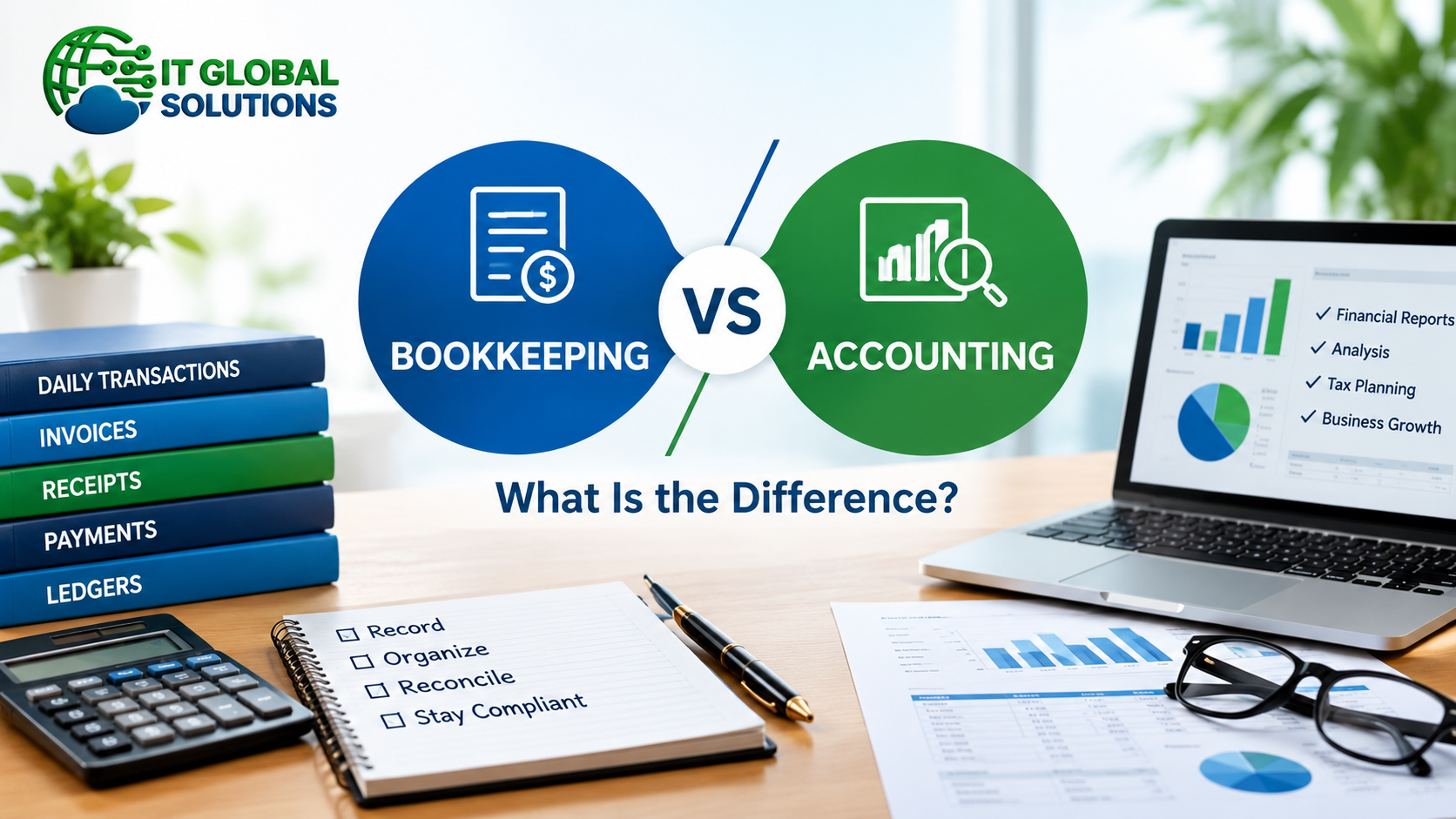
Every business needs to keep track of its financial activities to operate smoothly and make informed decisions. Whether you run a small business, a startup, or an established company, understanding your income, expenses, profits, and financial obligations is essential. This is where bookkeeping and accounting play an important role.
Although bookkeeping and accounting are closely related, they serve different purposes. Bookkeeping focuses on recording daily financial transactions, while accounting involves analyzing, interpreting, and reporting financial information. Understanding the difference between bookkeeping and accounting can help business owners manage their finances more effectively.
In this blog, we will explore the key differences between bookkeeping and accounting, their benefits, and how to determine which services your business needs.
What Is Bookkeeping?
Bookkeeping is the process of recording and organizing a business’s daily financial transactions. It provides an accurate record of the money coming into and going out of the business.
Bookkeepers ensure that financial records are properly maintained, updated, and organized. These records help business owners understand their regular financial activities and provide a foundation for accounting.
Key Responsibilities of Bookkeeping
Some common bookkeeping tasks include:
- Recording daily income and expenses.
- Maintaining sales and purchase records.
- Preparing and tracking invoices.
- Recording payments received from customers.
- Managing accounts payable and accounts receivable.
- Reconciling bank statements with financial records.
- Organizing receipts, bills, and other financial documents.
Accurate bookkeeping helps businesses maintain organized financial records and makes it easier to prepare financial reports, file taxes, and monitor cash flow.
What Is Accounting?
Accounting is the process of examining, analyzing, and interpreting financial information to understand a business’s overall financial performance. It uses the records maintained through bookkeeping to prepare reports and support financial planning.
Accounting helps business owners understand whether their company is profitable, identify financial risks, manage tax obligations, and make better business decisions.
Key Responsibilities of Accounting
Accounting generally includes the following activities:
- Preparing financial statements and reports.
- Analyzing business income, expenses, and profitability.
- Preparing budgets and financial forecasts.
- Calculating tax liabilities and supporting tax compliance.
- Reviewing financial records for accuracy.
- Evaluating business performance.
- Providing insights for financial planning and decision-making.
For businesses in India, accounting may also support compliance with applicable GST, income tax, TDS, and other statutory requirements, depending on the nature and size of the business.
Bookkeeping vs Accounting: Key Differences
Although both services help manage business finances, their primary functions are different.
1. Meaning
- Bookkeeping: Records and organizes daily financial transactions.
- Accounting: Analyzes and interprets financial information.
2. Main Purpose
- Bookkeeping: Maintains accurate and organized financial records.
- Accounting: Helps understand financial performance and make business decisions.
3. Activities
- Bookkeeping: Records income, expenses, invoices, purchases, and payments.
- Accounting: Prepares financial reports, analyzes profits, and supports tax planning.
4. Focus
- Bookkeeping: Focuses on day-to-day financial transactions.
- Accounting: Focuses on the overall financial position of a business.
5. Skills Required
- Bookkeeping: Requires knowledge of transaction recording and bookkeeping software.
- Accounting: Requires knowledge of accounting principles, financial reporting, and analysis.
6. Output
- Bookkeeping: Produces organized transaction records, ledgers, and payment details.
- Accounting: Produces financial statements, reports, and financial analysis.
7. Frequency
- Bookkeeping: Usually performed daily, weekly, or monthly.
- Accounting: Often performed monthly, quarterly, or annually, depending on business needs.
8. Decision-Making
- Bookkeeping: Provides the financial data needed for business decisions.
- Accounting: Uses that data to guide financial planning and business decisions
In simple words: Bookkeeping records financial transactions, while accounting explains what those transactions mean for your business.
Why Is Bookkeeping Important for Businesses?
Bookkeeping is essential because it helps businesses maintain a clear and reliable record of their financial activities.
1. Keeps Financial Records Organized
Maintaining proper records of income, expenses, purchases, and sales makes it easier to track transactions and locate financial information when needed.
2. Helps Monitor Cash Flow
Regular bookkeeping allows business owners to understand how much money is coming in and going out. This helps them plan payments, manage expenses, and avoid unnecessary cash flow problems.
3. Supports Tax Preparation
Well-maintained financial records make tax preparation easier. Businesses can access the information required to calculate taxable income and prepare relevant tax filings.
4. Reduces Errors
Recording transactions regularly helps identify missing entries, duplicate payments, and discrepancies before they become bigger problems.
5. Saves Time
Organized records reduce the time spent searching for invoices, receipts, and payment details during financial reviews or tax preparation.
Why Is Accounting Important for Businesses?
Accounting goes beyond recording transactions and helps business owners understand the financial health of their company.
1. Measures Business Profitability
Accounting reports help businesses determine whether they are making a profit, operating at a loss, or spending more than expected.
2. Supports Better Financial Decisions
Accurate financial analysis helps business owners decide when to invest, expand operations, control expenses, or introduce new products and services.
3. Helps With Budgeting and Forecasting
Accounting information can be used to create budgets and estimate future revenue, expenses, and cash requirements.
4. Supports Tax and Regulatory Compliance
Proper accounting helps businesses prepare financial information for applicable tax filings and other statutory obligations. It also helps identify potential compliance issues that require attention.
5. Improves Financial Planning
Accounting gives business owners a broader understanding of their financial position, helping them set realistic goals and plan for long-term growth.